The German manufacturer Opel, a historical leader in the automotive world with its innovative models, is celebrating the 60th anniversary of the Kadett B model. The Kadett B and Opel’s first concept car, the Experimental GT, made their world premieres at the IAA event in Frankfurt in 1965, captivating experts and car enthusiasts.
The Opel Kadett B offered customers a wide range of choices during its time, with options including the two or four-door sedan, station wagon, and the “Gill Coupé.” Furthermore, the Rallye-Kadett achieved countless successes both domestically and internationally. With this model, Opel carved a strong niche for itself in the affordable compact sports car category. Moreover, hybrid and battery-electric cars based on the Kadett B were later introduced to the market. Today, Opel continues to impress customers with the current Astra model, which boasts the broadest selection of engine and drive options.
A Legacy of Innovation: From Kadett B to Experimental GT
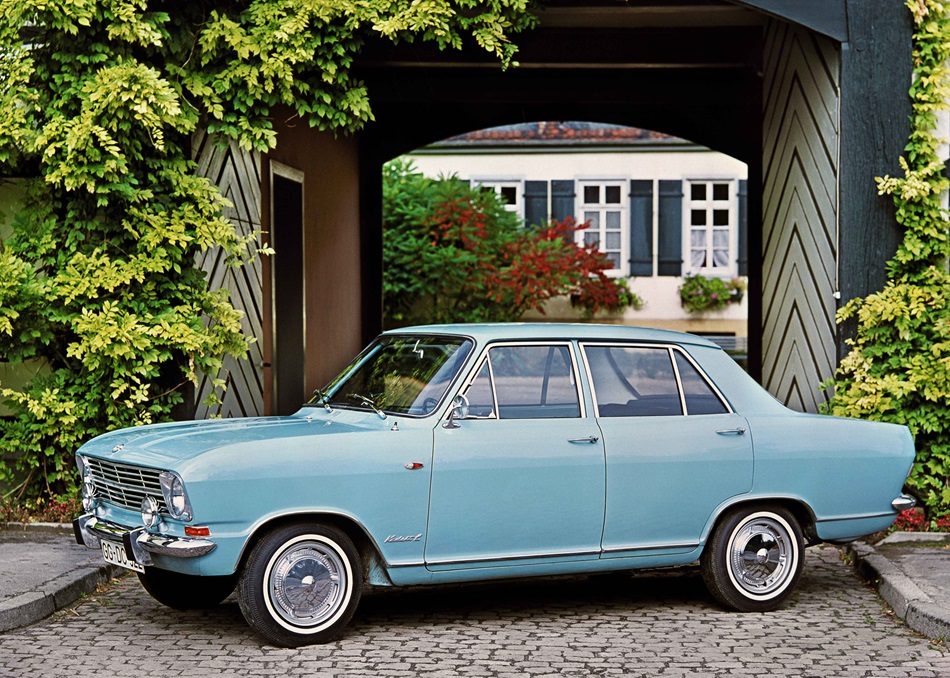
The Rüsselsheim-based German automaker Opel continues the tradition it began in 1965, when it became the first European brand to introduce a concept car. Sixty years ago, Opel celebrated the world premiere of the Kadett B alongside the Experimental GT at the IAA event in Frankfurt. The two models shared a strong connection; when the GT went into production, it was based on the Kadett B’s technical foundation.
Shortly after its introduction in 1965, it was clear that the Kadett B perfectly captured the spirit of the era. It not only maintained the success of the first generation, introduced just three years earlier, but was immediately recognized as destined to surpass it. In the following years, the Kadett B became Opel’s first model to reach 1 million units in sales. The reasons behind this success were clear: the sedan, station wagon, and coupé versions offered diversity and versatility for families, while the legendary Rallye-Kadett brought unmatched sportiness.
The Modern Successor: The New Opel Astra

Opel‘s long-lasting success in the compact class with the Kadett A and B in the 1960s is continued today by the new generation of the Astra. The Astra offers a wide variety to suit every taste and need. Customers can choose between a sporty and elegant hatchback or a flexible and functional Sports Tourer. The Astra also features innovative technologies and comfort features, such as the ergonomic Intelli-Seat, which customers often expect only from higher-class vehicles.
Furthermore, the newest generation of the Astra offers the broadest range of engine options of any current Opel model. The lineup spans from efficient internal combustion engines to plug-in hybrids and hybrids with 48-volt technology, and even the fully electric and zero-emission Astra Electric.
Kadett B: Bigger, Better, and Broader
Three years after the Kadett A laid the foundation for Opel‘s compact class success story in 1962, the next generation, the Kadett B, was introduced. From its launch, the new Kadett was available in four different body variants: a two- or four-door sedan, a three-door station wagon, and a stylish coupé. While its predecessor could only seat a maximum of four, the 1965 Kadett sedan was registered for five seats for the first time. The vehicle’s length also increased by 18 centimeters, exceeding four meters. The wheelbase and vehicle width were also increased, significantly contributing to interior comfort. Luggage capacity reached 337 liters according to VDA standards, a 12% increase. The station wagon version offered a loading area of up to 1.57 meters when the rear seats were folded down.
The model’s world premiere at the IAA generated great excitement among experts. The Kadett B offered more body variants than its predecessor and was also more comfortable, spacious, safer, and more powerful. All of this was achieved with just a 100 German Mark surcharge. Opel’s advertising slogans for the Kadett perfectly reflected this: “Opel Kadett: O.K. in short” or “Opel Kadett. Das Auto.”
Style Meets Sportiness: The “Gill Coupé” and the Victorious Rallye-Kadett
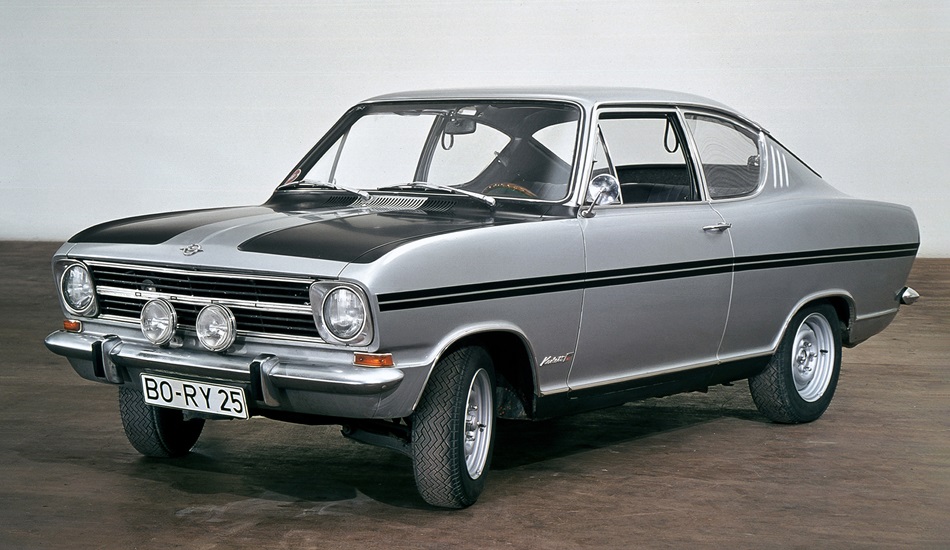
Opel designers proved once again that the Kadett was not only practical but also highly attractive with the introduction of a striking coupé, inspired by the fastback models popular in the U.S. The gently sloping rear section gave the coupé a dynamic line, promising speed. Three air vents on the B-pillar entered automotive history: the attractive two-door model was quickly nicknamed the “Gill Coupé.” Today, this special version of the Kadett remains highly sought after by collectors.
The Rallye-Kadett, meanwhile, became an accessible object of desire for many car enthusiasts and motorsport fans. With this model, Opel successfully captured the niche of the affordable compact sports car. Visually striking with its matte black hood and decorative stripes, the coupé was initially offered with a 44 kW (60 HP) twin-carburetor version of the 1.1-liter engine available in all variants, and from 1967 onward, it was equipped with a 1.9-liter unit. This 66 kW (90 HP) engine propelled the coupé to a top speed of 170 km/h, with a sporty chassis providing additional safety.
With its sporty equipment and excellent driving performance, the Rallye-Kadett formed the perfect basis for popular sports vehicles. The matte black hood was not just a design choice but a functional detail inspired by rally experience, preventing sun glare from blinding the driver. This unique color quickly became the Rallye-Kadett’s trademark.
The Rallye-Kadett garnered attention with countless successes on tracks both domestically and abroad. Its list of victories quickly grew, making its mark in events like the Stuttgart-Lyon-Charbonnières Rally, the Hessian Rally, the Trifels Rally, and the Tour de Luxembourg. Günther Irmscher, who modified Opel vehicles, became the winner of the Tour d’Europe in 1967. In the same year, the Kadett celebrated its greatest success to date: the Lambart/Vogt team won their class at the Monte Carlo Rally. Statistics from 1968 clearly demonstrated the Rallye-Kadett’s popularity and success: participating in a total of 238 events, the model achieved class victory 222 times and secured 345 gold and 287 silver medals.
The Elegant Sibling: The Opel Olympia
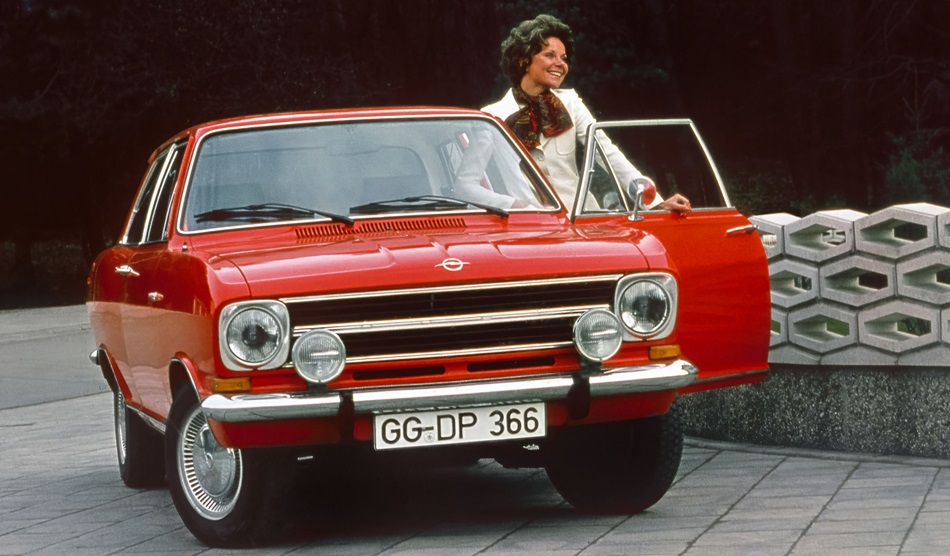
In September 1967, the premium model Olympia A, developed based on the Kadett B, was introduced. With this, Opel once again demonstrated its pioneering spirit in niche vehicles by filling the gap between the Rekord and the Kadett. Contemporary Opel press releases described the model: “The Olympia is a logical application of the successful Kadett concept. With equally compact exterior dimensions, the Olympia impresses with high performance, exceptional equipment, and driving comfort.” The luxurious compact model, offered with three different power options—44, 55, and 66 kW (60, 75, and 90 HP)—stood out with its rich features. Special embroidered carpets and a dashboard with “quality wood look” trim enhanced the interior’s premium character. On the exterior, chrome strips around the fenders, a modified radiator grille, rectangular front headlights, and enlarged rear side windows were notable features.
A World Car with Electric Roots
While the Olympia offered three hatchback versions at the time, its sibling, the Kadett, was available in an impressive eight different body variants during its final production years: two- and four-door notchback sedan, two-door “Gill” Coupé, three- and five-door station wagon, two- and four-door “LS” hatchback sedan, and two-door “LS” coupé. The Kadett B series was offered with four proven different engine displacements (1.1-liter, 1.2-liter, 1.7-liter, and 1.9-liter) of longitudinally mounted inline four-cylinder engines.
Furthermore, the Kadett B was a true pioneer for electric vehicles. Opel’s first vehicles with an electric powertrain, the “Stir-Lec I” hybrid test vehicle from 1969 and the fully electric Kadett XEP from 1970, were developed based on this successful model.
The unique career of the Kadett B model, a true “world car” sold in over 120 countries worldwide, concluded in July 1973, with its successor already poised at the starting line. The Kadett B not only cemented its own name in history but also paved the way for the success of the Opel GT by providing its technical platform.